See What a Visual Inspection Can't — Thermal Drone Roof Inspections in Nebraska
A standard rooftop walkdown tells you what's visible. It won't tell you where water has already infiltrated your insulation, where membrane adhesion has failed beneath the surface, or how far moisture has migrated from the original entry point. Thermal drone roof inspections change that. Using infrared imaging from above, we scan your entire roof surface and produce a documented, evidence-based report — so repair decisions are grounded in data, not guesswork.
Why Thermal Imaging Finds What Visual Inspections Miss
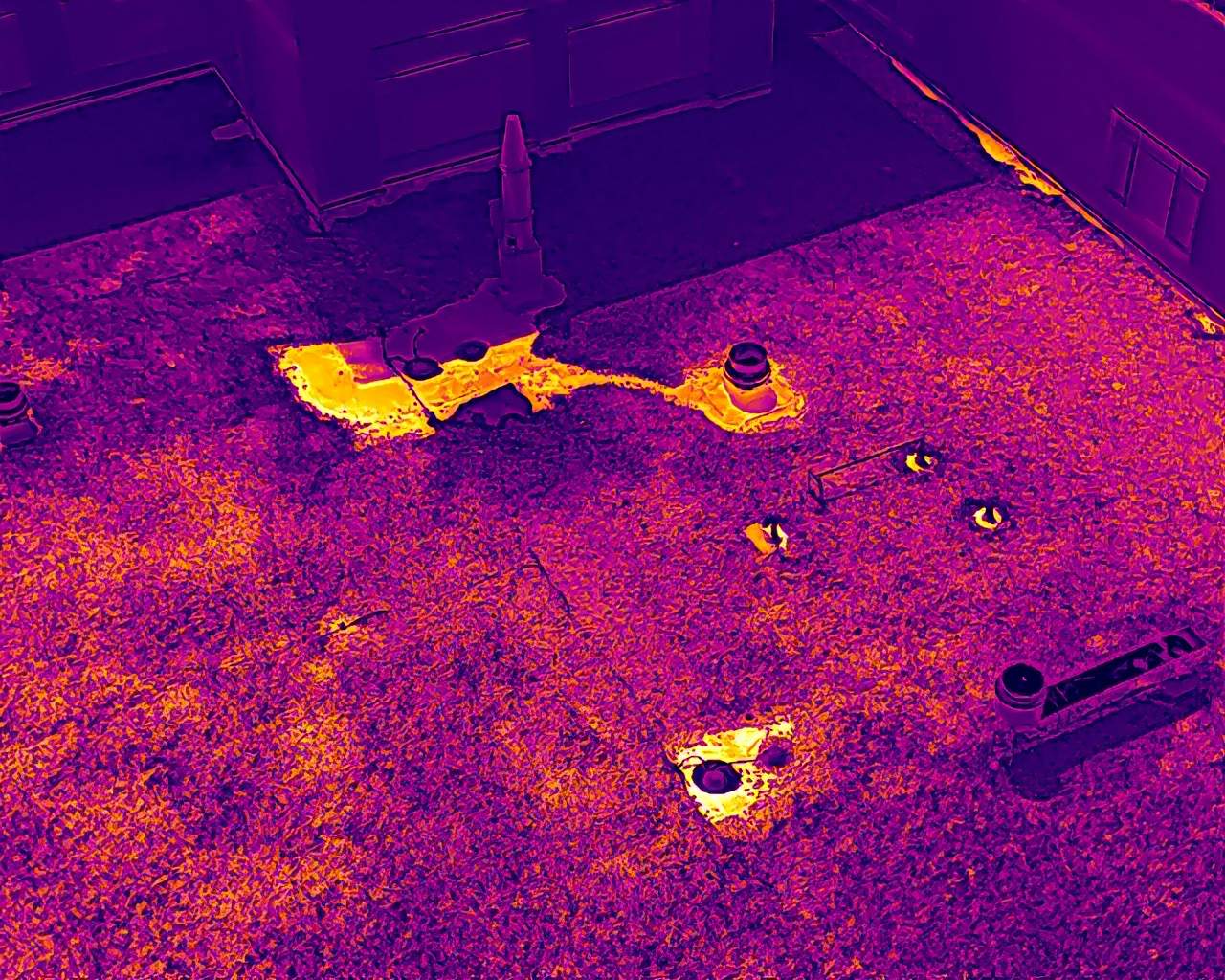
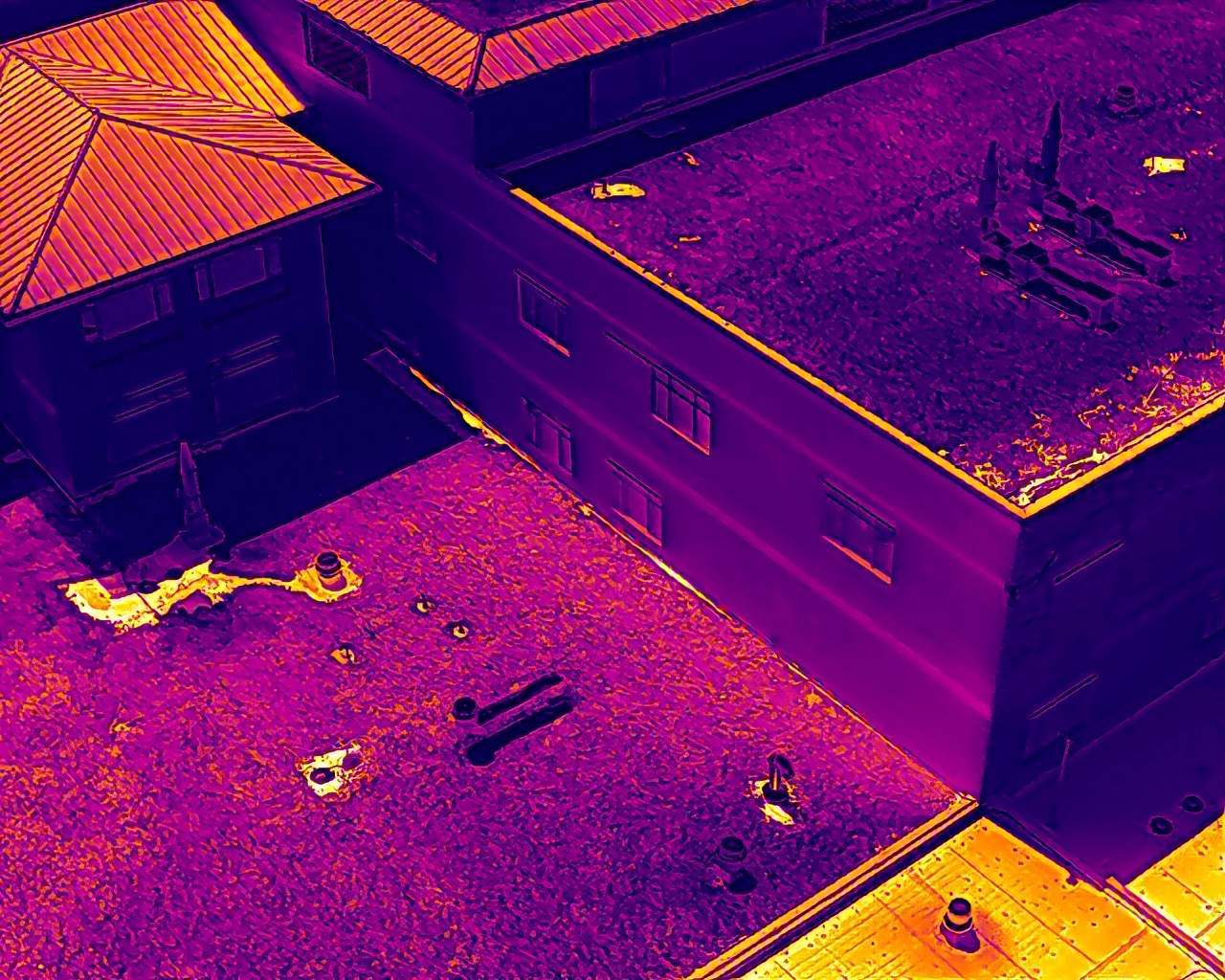
Water doesn't stay where it enters. It travels laterally through insulation, pooling in pockets that may be feet away from any visible damage. By the time a blister, stain, or soft spot appears at the surface, the underlying problem has often been spreading for months. Infrared thermography detects the temperature differential that wet insulation creates as it releases stored heat after sunset — making moisture intrusion visible even when the membrane above it looks intact. For commercial property owners managing large roof areas, this is the difference between scoping a targeted repair and discovering a system-wide replacement need before it reaches that point.
What Our Thermal Drone Inspection Process Covers
Whole-Roof Infrared Scanning
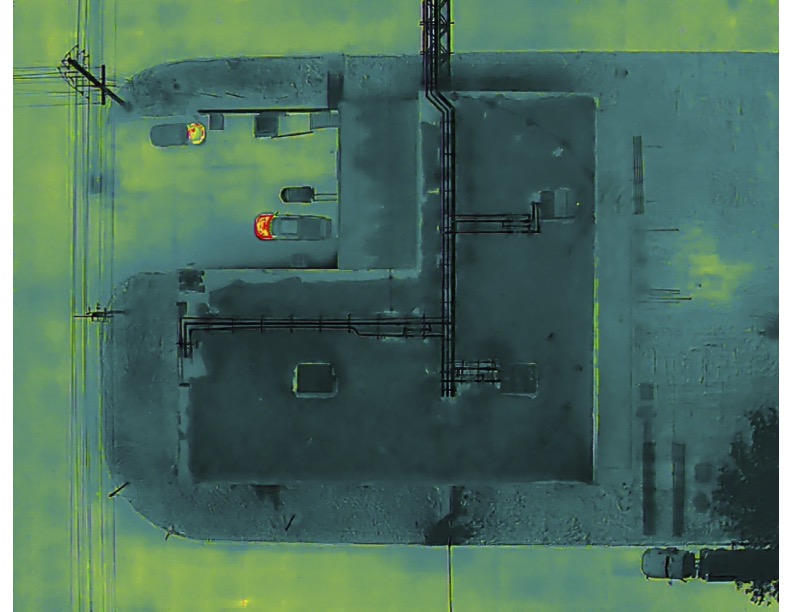
We fly the roof after sunset during optimal thermal conditions, capturing a complete infrared image set across the entire surface. No core cuts. No disruption to your building's operations. The drone covers ground-level-inaccessible areas, equipment curbs, penetrations, and field membrane in a single systematic pass.
Moisture and Adhesion Mapping
The thermal data is analyzed to identify areas of suspected moisture saturation and membrane delamination. Each anomaly is mapped to a specific location on the roof diagram, giving your repair crew or project manager a precise target rather than a general problem area.
Documented Inspection Report
You receive a written report with annotated aerial imagery, infrared overlays, and a summary of findings. The report is formatted to support repair scoping, insurance documentation, capital planning, or facility maintenance records — whatever your workflow requires.
Repair Scoping and Follow-Through
We don't hand off the report and disappear. Prairie View Roofing uses the inspection findings to scope repair work directly, so the same team that identified the problem can execute the fix. This continuity eliminates the gap between diagnosis and action that often delays commercial roof repairs.
Who Benefits Most from Thermal Drone Inspections
Thermal drone inspections are particularly valuable for building owners and facility managers who need to make defensible decisions about a roof before committing to a repair or replacement budget. Common use cases include:
- Pre-purchase due diligence on commercial or industrial properties
- Annual condition assessments for facilities with aging low-slope or membrane roofs
- Post-storm damage documentation for insurance claims
- Verifying the scope of a suspected leak before authorizing repair work
- Benchmarking roof condition as part of a long-term capital plan
- Schools, healthcare facilities, and municipal buildings where operational disruption must be minimized
If you manage multiple properties or a large facility footprint across Central Nebraska, thermal inspections give you a consistent, repeatable method for tracking roof condition over time.
How Thermal Imaging Works on Low-Slope Commercial Roofs
Infrared thermography works on the principle that wet insulation retains heat longer than dry insulation. After a sunny day, the entire roof surface absorbs solar energy. As temperatures drop in the evening, dry areas cool quickly while moisture-saturated areas release heat more slowly — creating a thermal signature that infrared cameras detect as a temperature differential. The drone captures this contrast across the full roof plane, producing a heat map that makes subsurface moisture visible from above. This method is nondestructive, meaning no membrane cuts or core samples are required to identify problem areas. It's also significantly faster than manual probing across large roof surfaces, and far more comprehensive than a visual walkdown alone.
Frequently Asked Questions
How soon after installation or a storm can a thermal inspection be performed?
The roof surface needs adequate solar exposure beforehand, so inspections are typically scheduled after a full sunny day with no rain in the preceding 24–48 hours. We'll coordinate timing based on your location and current weather conditions to ensure reliable results.Does a thermal drone inspection work on all commercial roof types?
It works best on low-slope systems with insulation beneath the membrane — TPO, EPDM, modified bitumen, and built-up roofing are all well-suited candidates. Metal roofs and steep-slope systems have different thermal profiles and may require a different inspection approach.Will the inspection disrupt building operations?
No. The drone flies the exterior of the building after hours. There's no interior access required and no disruption to tenants, staff, or building systems during the scan.How accurate is thermal imaging at identifying moisture?
Thermal imaging is highly reliable when conditions are right. It identifies areas of suspected moisture saturation that warrant further investigation — the report distinguishes confirmed anomalies from areas requiring follow-up. In most cases, findings are validated during the repair process when the membrane is opened.Can I use the thermal inspection report for insurance or warranty purposes?
Yes. The report includes annotated aerial imagery and infrared overlays that document roof conditions at a specific point in time. Many property owners use these reports to support insurance claims, manufacturer warranty claims, or capital planning documentation.